


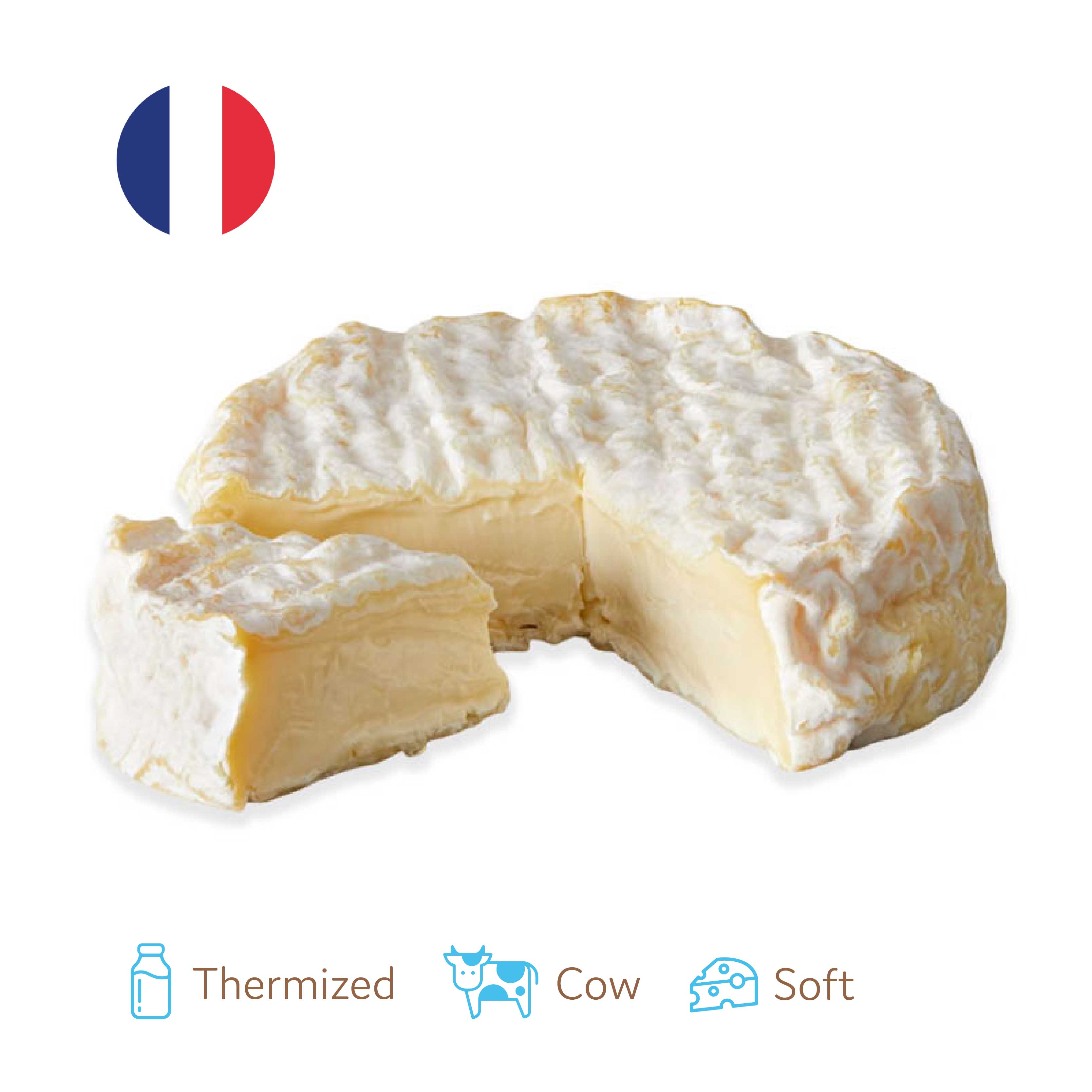
France Mons Saint Félicien IGP 150g
Item #757009
HK$120.0
/ pc
Availability:
Out of Stock
Its origin is very similar to the Saint Marcellin. It has its roots in the Ardèche region and used to be made with cow's milk or goat milk, depending on the season. Today, it is enriched in fat for a smoother texture, and is often less rustic than the Saint Marcellin
Tasting Notes: This cheese has a thin and smooth wrinkled rind with a creamy white paste. Scents of fresh cream and barn. A bit sour, on the palate with a bestial finale.
Pairing Suggestion: Enjoy this cheese with a slice of farmhouse bread, a thin layer of honey, and a glass of spicy red wine!
Wine Pairing: