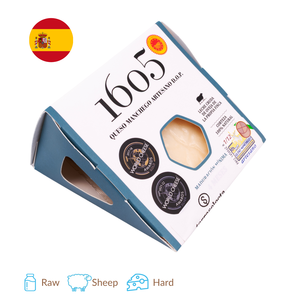


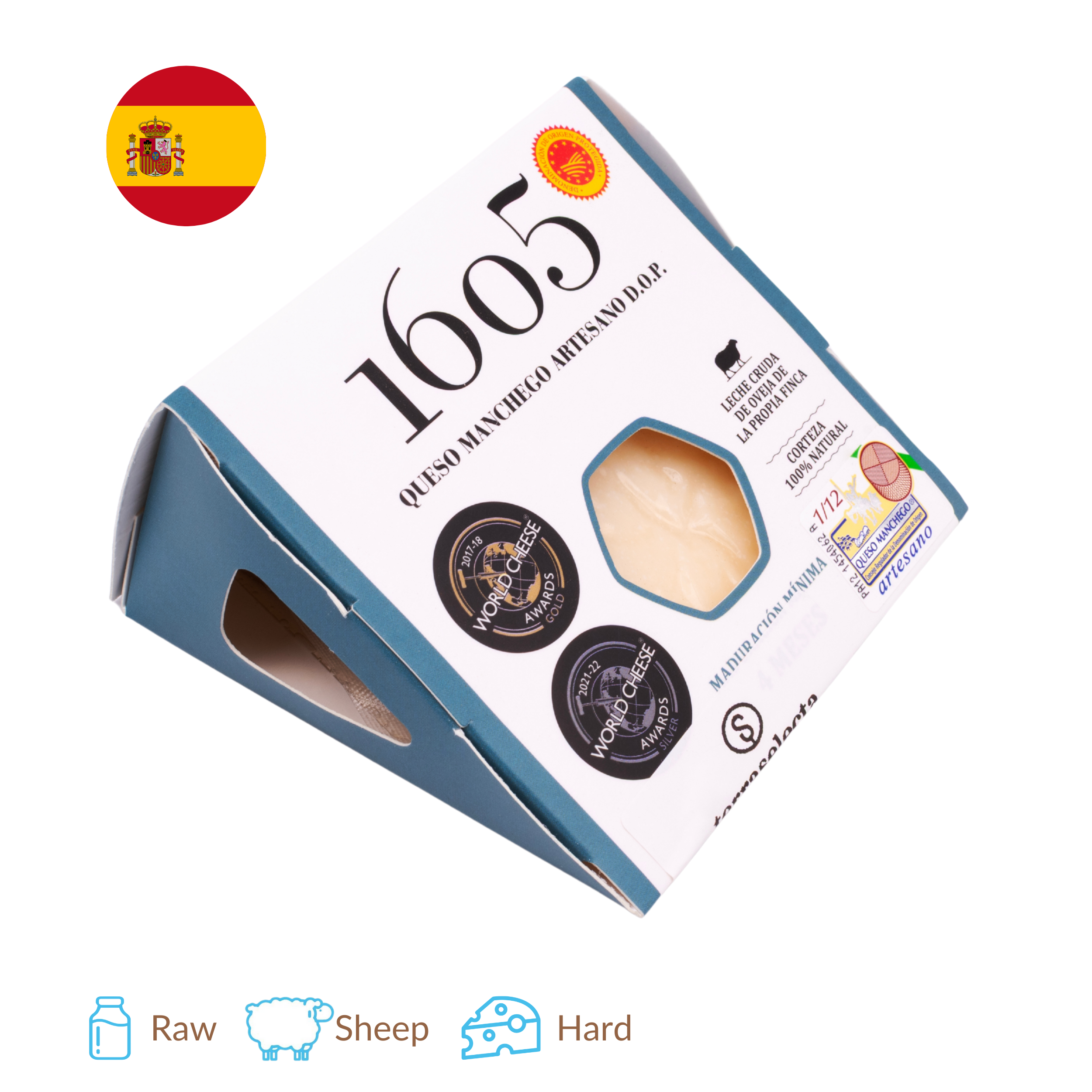
Spain Mons Manchego 4-6M 240g
Enjoy it with candied fruit bread, or let yourself be tempted by a multitude of gourmet pairings. It will add a refined touch to your tapas, and sublimate your salads and polenta. For a daring alliance, marry it with avocado, add a drizzle of olive oil and season with a pinch of Espelette pepper.
Its name comes from its region of origin: La Mancha, a natural habitat for the Manchega breed of sheep, which is highly productive and perfectly adapted to the extreme and highly variable climate of these areas: very cold in winter and very hot in summer. This cheese is often mentioned in books such as “El Ingenioso Hidalgo Don Quijote de la Mancha” by Miguel de Cervantes, where it is eaten with bread baked in a wood-fired oven, accompanied by a fruity red wine. It is also mentioned in the Diccionario General de la cocina (general dictionary of cooking) written in 1892.
Tasting Notes: Milk, strength and acidity, pungent and a strong and firm, sometimes acidic and pungent taste in the mouth if with prolonged ripening
Pairing Suggestion: Full-bodied red wine, Red or amber beer